Art Therapy FAQS
Answers to your questions about Art Therapy sessions
& Creative Art Therapy Place, PLLC Services
What is Art Therapy?
Art therapy is a form of psychotherapy that uses creative expression—such as drawing, painting, collage, sculpture, and mixed media—to help people explore emotions, process experiences, develop coping skills, and gain insight.
You don’t need to be an artist. In fact, many people who come to art therapy begin by saying some version of, “I’m not good at art.”
That’s completely okay. The goal isn’t to make something impressive—it’s to create something meaningful to you.
Sometimes words aren’t enough to explain how we feel. Art gives us another language for understanding and expressing our experiences.
At Creative Art Therapy Place, individual Art Therapy sessions are available in person in Greenpoint, Brooklyn, and virtually throughout New York State.
Do I need to be good at art to do Art Therapy?
Not at all.
Art therapy is not about artistic skill or technique. It’s about expression, exploration, and the creative process.
Some people make detailed images. Others scribble, experiment with color, make a collage, or create something abstract and discover that it represents an experience they had difficulty putting into words.
Your therapist isn’t judging your artwork. Instead, we might explore what you noticed while creating it, what feelings or thoughts emerged, or what the image means to you.
The process is often more important than the finished artwork.
What happens in an individual Art Therapy session?
Sessions typically begin with a check-in about how you’re feeling and what has been happening in your life. Depending on your needs that day, your therapist may introduce an Art Therapy directive, help you select materials, or give you space to create more freely.
Art Therapy might include:
Drawing or painting emotions
Creating visual timelines
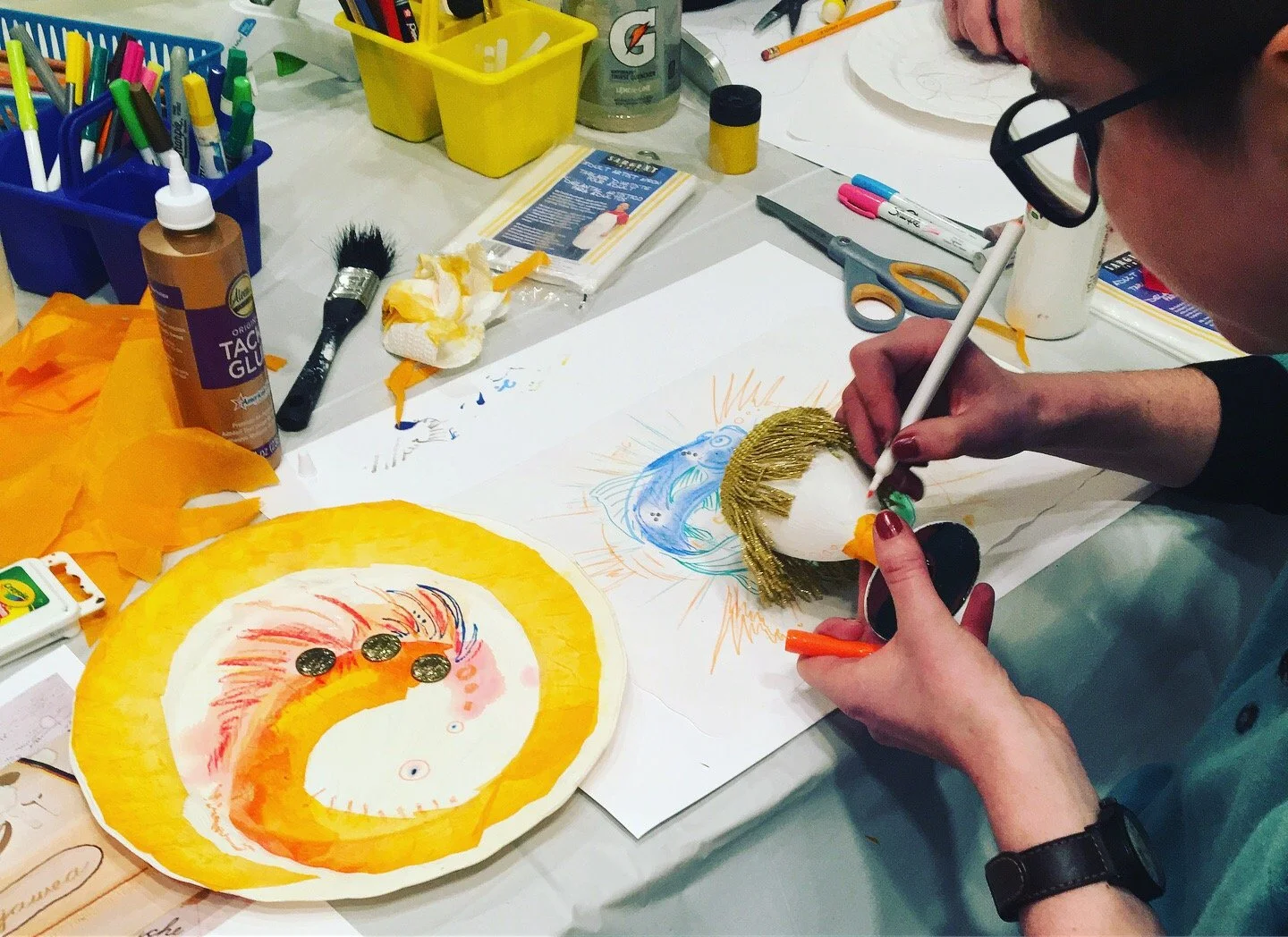
Collage and mixed-media work
Exploring symbols and metaphors
Clay and three-dimensional art-making
Mindful or intuitive art-making
Creating images related to coping skills, relationships, identity, boundaries, or personal goals
As you create, we may talk about what you are noticing—thoughts, memories, emotions, physical sensations, associations, or reactions.
Sometimes insight emerges while making the artwork. Sometimes it happens when we look at the piece afterward. And sometimes creating simply provides a quiet opportunity to slow down, regulate, and reconnect with yourself.
Art Therapy can also be integrated with verbal psychotherapy, CBT, DBT, mindfulness, psychodynamic exploration, and other therapeutic approaches depending on your individual needs and treatment goals.
Do you offer virtual Art Therapy?
Yes. Creative Art Therapy Place offers virtual individual Art Therapy and psychotherapy for clients located in New York State.
You do not need an elaborate collection of art supplies to participate virtually. Many Art Therapy interventions can be adapted to materials you already have at home, such as paper, pens, pencils, markers, crayons, paint, collage materials, or a journal.
Your therapist can help you determine which materials may be useful based on your interests, treatment goals, and available space.
Where are in-person Art Therapy sessions located?
In-person individual Art Therapy sessions are offered at our office in Greenpoint, Brooklyn, conveniently located near public transportation.
The office provides a private, creative environment with a variety of art materials available for therapeutic use. Sessions may incorporate art-making, verbal psychotherapy, or a combination of approaches depending on what is most useful to you.
What kinds of issues can Art Therapy help with?
Art Therapy can support children, adolescents, and adults experiencing a variety of emotional, behavioral, and life challenges, including:
Anxiety and stress
Depression and mood-related concerns
Trauma and difficult life experiences
ADHD and executive-functioning challenges
Emotional regulation difficulties
Autism and sensory needs
Relationship and interpersonal concerns
Grief and loss
Life transitions
Burnout
Self-esteem and identity exploration
Creative blocks
Difficulty expressing or understanding emotions
Art Therapy can also provide space for self-reflection, personal growth, and emotional processing, even when there isn't one specific problem you are trying to solve.
Many people seek Art Therapy because they want psychotherapy that feels more experiential, creative, and individualized than traditional talk therapy alone.
Is Art Therapy evidence-based?
Art Therapy is an established mental health profession within the broader field of Creative Arts Therapy and is practiced in hospitals, schools, mental health programs, community settings, and private practices.
A growing body of research has examined the use of Art Therapy for areas including emotional regulation, stress, trauma-related symptoms, depression, anxiety, and quality of life.
Art Therapy combines psychotherapeutic principles with creative and experiential processes. For some people, images, symbols, sensory experiences, and art materials provide ways of exploring experiences that can be difficult to access through conversation alone.
What kinds of art materials do you use?
In-person sessions may incorporate a variety of materials depending on your interests and therapeutic goals, including:
Pencils, markers, pastels, and other drawing materials
Watercolor and acrylic paint
Collage and mixed media
Clay and sculptural materials
Found objects
Journaling and visual storytelling
Sensory and tactile materials
You are never required to use a particular material—or to make art during every session.
For virtual Art Therapy, your therapist can help adapt creative interventions to the materials you have available at home. Even simple materials like paper and a pen can be used for meaningful Art Therapy work.
How is Art Therapy different from an art class?
In an art class, the focus is generally on learning artistic techniques, developing skills, or creating a particular type of artwork.
In Art Therapy, the focus is on you and your therapeutic process.
There is no right or wrong way to create something in therapy. Rather than evaluating your artistic ability, we explore your experience of creating, the meaning you find in your artwork, and how the process relates to your emotions, relationships, experiences, and treatment goals.
It's less about making something “good” and more about making something meaningful.
What if I don't know what to make?
That's completely normal.
You don't need to arrive at a session with an idea. Your Art Therapist can offer prompts, structured directives, materials, or themes based on what you are currently working on in therapy.
At other times, you may create more freely and see what emerges.
There is no expectation that you know what your artwork will become before you begin.
Is Art Therapy helpful for people who have experienced trauma?
Art Therapy can be helpful for some people who have experienced trauma because it provides additional ways to explore emotions, memories, body sensations, relationships, and experiences beyond verbal conversation alone.
Images and symbols can also provide some distance from difficult material, allowing experiences to be approached gradually and at a pace appropriate for the individual.
Trauma-focused work at Creative Art Therapy Place is individualized and may integrate Art Therapy with verbal processing, grounding, mindfulness, emotional-regulation skills, CBT, DBT, and psychodynamic approaches.
You are never required to depict or disclose traumatic experiences through artwork before you feel ready.
Can Art Therapy help with anxiety?
Art Therapy can be used to help people understand anxiety, recognize triggers, develop coping strategies, increase emotional awareness, and practice grounding and mindfulness.
For some people, the sensory and repetitive aspects of drawing, painting, collage, or working with other materials can also provide an opportunity to slow down and reconnect with the present moment.
Art Therapy may be combined with CBT, DBT, mindfulness, and other psychotherapy approaches to develop practical strategies for managing anxiety both during and outside of sessions.
Is Art Therapy just for children?
Not at all.
Art Therapy can be used with children, adolescents, and adults. The way Art Therapy is used changes depending on the person's age, interests, needs, and treatment goals.
Children may benefit from having a developmentally appropriate way to communicate experiences and practice emotional-regulation skills. Adolescents may use creative work to explore identity, relationships, emotions, and life transitions. Adults often appreciate having an experiential way to explore patterns, relationships, trauma, self-esteem, stress, and emotions alongside verbal psychotherapy.
Individual Art Therapy at Creative Art Therapy Place is available in person in Greenpoint, Brooklyn, and virtually for clients throughout New York State.
Do you accept insurance?
Creative Art Therapy Place is generally an out-of-network psychotherapy practice. Depending on your insurance plan, you may have out-of-network mental health benefits that reimburse a portion of the cost of therapy. We recommend contacting your insurance company directly to learn about your specific out-of-network benefits.
A sliding scale may also be available based on financial need for individuals who do not have insurance coverage. Availability is limited and can be discussed when you inquire about services.
Brittany Knapp, LCAT, ATR also accepts Cigna and Carelon insurance through Headway for eligible individual therapy sessions. Insurance participation and eligibility can vary, so please email us to inquire about currently accepted insurance plans and coverage before scheduling.
Do you offer Art Therapy workshops for organizations or companies?
Yes. In addition to individual psychotherapy, Creative Art Therapy Place may provide interactive Art Therapy and creative wellness workshops for organizations, companies, and community settings on a case-by-case basis.
Workshops can be tailored to the needs of the organization and may focus on topics such as stress management, mindfulness, creative self-expression, emotional wellness, team connection, or burnout prevention.
Workshop availability, format, group size, goals, and pricing are determined individually. Organizations interested in arranging a workshop are welcome to contact us to discuss their needs.